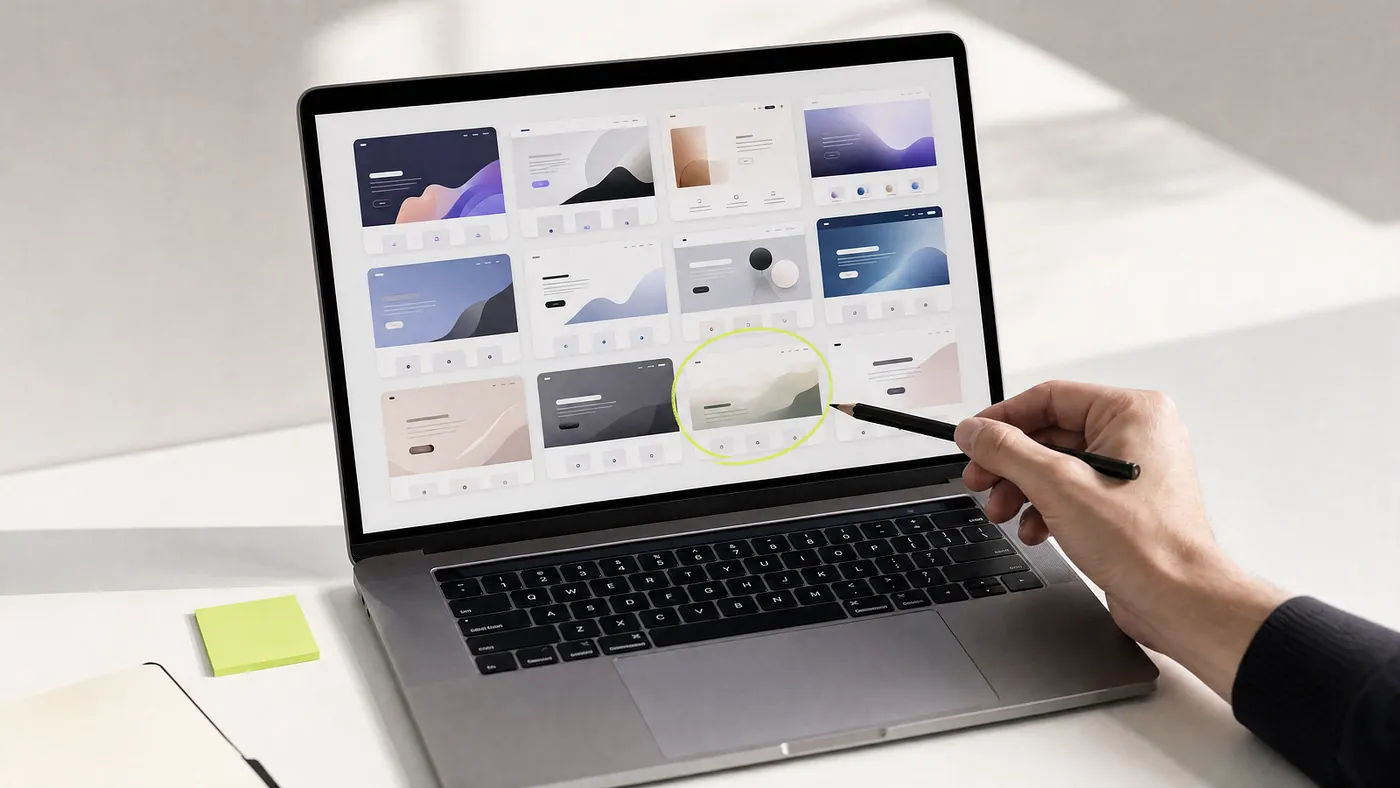

Someone once showed me a prompt that looked like a business plan.
It had a role, a target audience, a tone of voice, a structure, a list of rules, and even a line that said, “Think like a world-class strategist.”
The output was beautiful.
Clean headline options.
Smart-sounding positioning.
A polished brand story.
A few campaign ideas that looked ready to use.
For a moment, it felt like strategy.
Then I read it again.
Something was missing.
Not grammar.
Not structure.
Not confidence.
Direction.
The work sounded good, but it did not feel chosen.
And that is where many brands are getting confused with AI.
We are becoming better at asking for answers. But we are not always becoming better at knowing which answer matters.
Prompting is how you ask.
Strategy is what you choose.
A good prompt can give you twenty homepage concepts, ten campaign ideas, five brand voices, and a full content calendar before your coffee gets cold.
But it cannot automatically know what your brand should stand for.
It cannot feel what your customer is tired of hearing.
It cannot decide what you should stop saying.
It cannot tell you which idea deserves to survive unless you already have a point of view.
That is the hidden risk with AI.
Before AI, weak strategy usually looked weak.
Now, weak strategy can look polished.
It can sound premium.
It can feel organized.
It can use all the right words.
Human-first.
Future-ready.
Seamless.
Scalable.
Effortless.
Personalized.
Nothing is wrong with these words.
They are just exhausted.
They do not tell us what the brand has lived through. They do not show what it believes. They do not make anyone stop and think, “This is different.”
AI can make average thinking look expensive.
That is why prompting alone is not enough.
A better prompt can improve the output.
It cannot decide the business.
It cannot choose your audience.
It cannot define your tension.
It cannot protect your brand from sounding like everyone else.
It cannot say, “This is clever, but it is not us.”
That sentence matters.
“This is not us.”
Because strategy is not about collecting more options. It is about knowing what to remove.
Remove the attractive idea that does not fit.
Remove the clever line that says nothing.
Remove the trendy visual that feels borrowed.
Remove the safe message that everyone in your industry already uses.
What remains is usually quieter.
But stronger.
A prompt might say:
“Create a premium landing page for an AI finance platform.”
A strategist asks:
“Why should anyone trust a new finance platform right now?”
That question changes the website.
A prompt might say:
“Write a friendly brand voice for a wellness product.”
A strategist asks:
“What kind of wellness language is our audience already tired of?”
That question changes the voice.

A prompt might say:
“Give me ten campaign ideas for a design agency.”
A strategist asks:
“What does this agency believe about design that cheaper competitors cannot copy?”
That question changes the business.
This is where human judgment becomes more valuable, not less.
AI can help us explore faster.
But someone still has to decide what is true.
Someone still has to notice when the work is polished but empty.
Someone still has to protect the brand from becoming a collection of nice-looking guesses.
The best use of AI is not to let it replace strategy.
Use it to challenge your thinking.
Use it to find weak spots.
Use it to create options.
Use it to show what competitors might say.
But do not hand over the final decision.
The final decision needs context.
It needs taste.
It needs restraint.
It needs someone who understands the customer, the product, the market, and the moment.
Because in the next few years, almost everyone will have access to the same tools.
The same models.
The same templates.
The same prompt packs.
The same “premium” language.
The difference will not be who can generate more.
The difference will be who can decide better.
Prompting is a skill.
Strategy is a responsibility.
And in the AI era, the most valuable creative person is not the one with the longest prompt.
It is the one who knows when to close the laptop and say:
“No. That is not the story.”
Written by Allgood Studio.
Human-led design, AI-assisted speed, and careful hands for brands, websites, and digital products.