The old creative process had a lot of waiting inside it.
Waiting for the first draft.
Waiting for the moodboard.
Waiting for the rough layout.
Waiting for the copy direction.
Waiting for the right idea to appear after five wrong ones.
Some of that waiting was useful.
Good work needs space.
It needs thinking.
It needs the quiet moment where someone looks at the screen and says, “No, this is not it yet.”
But some of the waiting was just friction.
Not creativity.
Not strategy.
Not taste.
Just slow movement.
That is the part AI has changed.
When we say Human-Led, AI-Speed, we do not mean the machine leads and humans clean up after it.
We mean the opposite.
The human leads.
The human decides the direction.
The human understands the audience.
The human feels when something is too generic.
The human knows when a line sounds clever but says nothing.
The human decides what should stay, what should go, and what should never be made in the first place.
AI helps us move faster through the early fog.
It can give us rough ideas.
It can create options.
It can organize messy thoughts.
It can help us explore directions before the day disappears.
But speed is not the same as judgment.
A fast wrong direction is still wrong.
This is where people misunderstand AI.
They think the value is in producing more.
More layouts.
More headlines.
More concepts.
More variations.
More everything.
But most creative work does not fail because there were not enough options.
It fails because nobody knew which option was right.
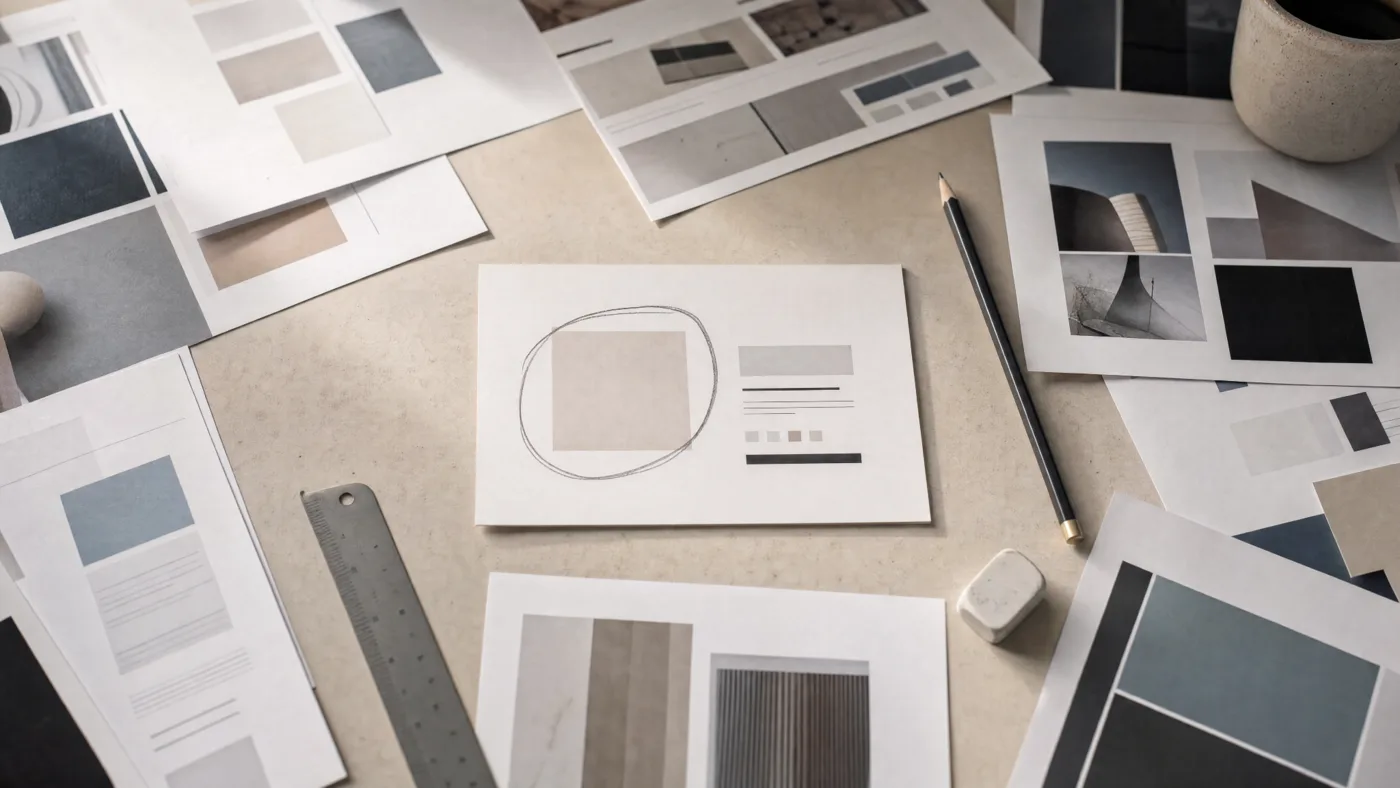
That is the human part.
AI can put ten ideas on the table.
A designer still has to look at them and say:
“This one feels too expected.”
“This one looks good, but it does not feel true.”
“This one is beautiful, but the customer will not believe it.”
“This one is quieter, but stronger.”
“This one has the idea.”
Human-led means we do not confuse output with progress.
Just because something appears quickly does not mean it is ready.
A polished draft can still be empty.
A clean design can still be wrong.
A smart-sounding paragraph can still miss the point.
AI can make the first version faster.
But someone still has to make it honest.
That is why human-led work still matters.
Because brands are not built from nice-looking pieces.
They are built from choices.
The words you choose.
The tone you avoid.
The image you remove.
The layout you simplify.
The promise you make clearer.
The feeling you protect.
AI-speed gives momentum.
Human judgment gives meaning.
One without the other becomes a problem.
Human-led without speed can become slow, expensive, and stuck in old habits.
AI-speed without human leadership becomes fast noise.
It looks busy.
It looks modern.
It looks productive.
But underneath, nothing important has been decided.
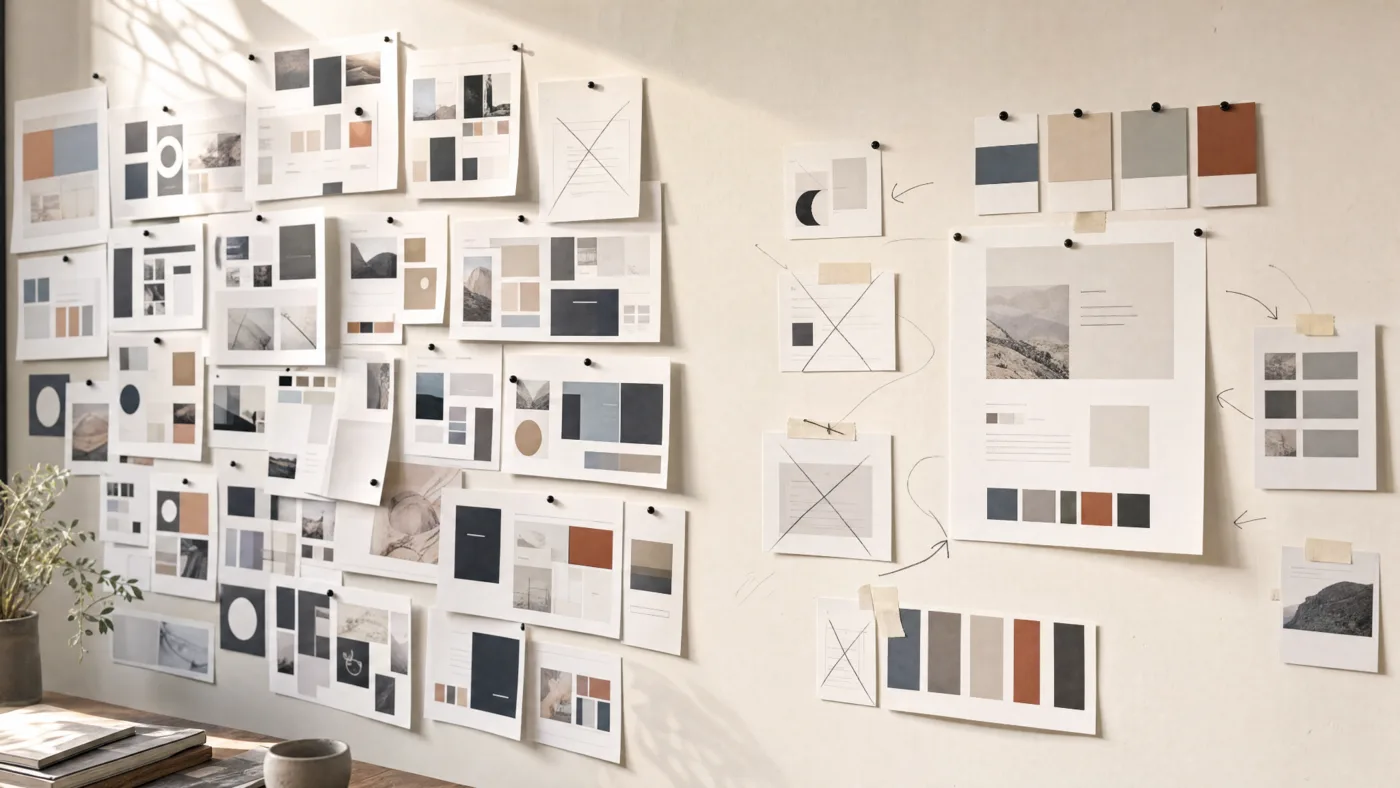
The best work happens in the middle.
Fast enough to explore.
Slow enough to care.
That is the balance we are looking for.
We use AI to move through the obvious ideas quickly, so we can spend more time on the ideas that deserve attention.
We use it to test directions, not to surrender direction.
We use it to remove blank-page pressure, not to remove responsibility.
We use it to protect time for taste.
This is also why the future of creative work will not belong to the person who can generate the most.
Anyone can generate more now.
The future belongs to the person who can choose better.
The person who can ask the sharper question.
The person who can see what feels borrowed.
The person who can remove the extra layer.
The person who can tell when the work has a pulse.
Because speed can take you somewhere quickly.
But it cannot tell you whether that place is worth going.
That is still our job.
So when we say Human-Led, AI-Speed, we are not trying to sound futuristic.
We are describing a simple way of working.
Let the machine help with the movement.
Let the human hold the meaning.
Let AI make the room louder with possibilities.
Then let a person walk in, look carefully, and choose the one idea that still feels alive when everything else goes quiet.
Written by Allgood Studio.
Human-led design, AI-assisted speed, and careful hands for brands, websites, and digital products.