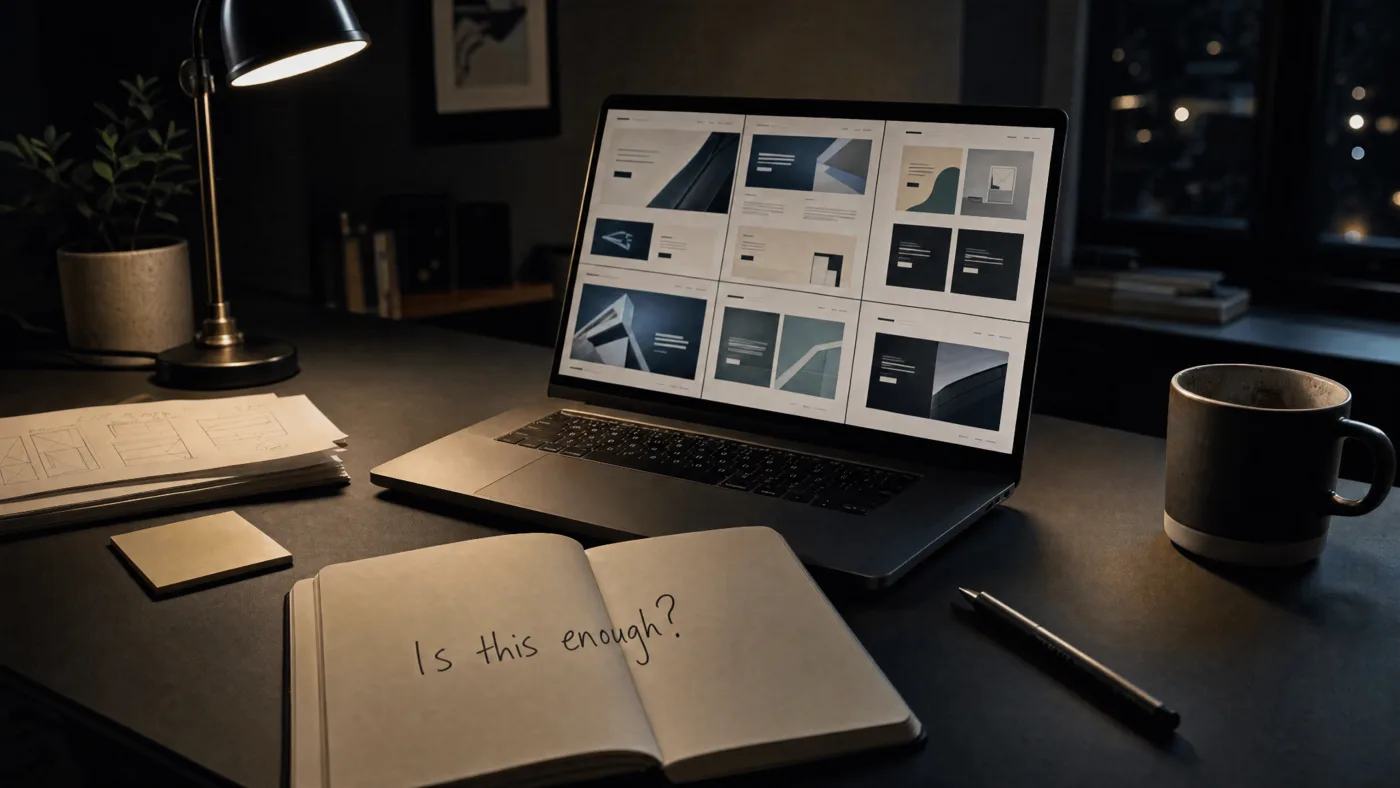
A designer opens a blank screen.
For years, that blank screen meant something.
It meant time.
Taste.
Experience.
A few bad ideas before one good one appeared.
Now, the same designer can type a few lines into an AI tool and watch ten layouts appear before the coffee gets cold.
Clean hero sections.
Perfect spacing.
Modern typography.
Nice cards.
Soft shadows.
The kind of design that used to impress people in a first meeting.
And for a moment, the room goes quiet.
Because the uncomfortable thought is not, “AI can design.”
The uncomfortable thought is, “A lot of what we called design already looked like this.”
AI did not kill designers.
It killed the safety of average design.
For a long time, average design survived because design was hard to produce.
A client could not quickly generate twenty landing pages.
A founder could not instantly compare five brand directions.
A marketing team could not ask a machine for ten polished social post styles before lunch.
So “clean” felt valuable.
A neat layout felt like skill.
A modern typeface felt like taste.
A trendy visual style felt like strategy.
But AI changed the floor.
It made the basic version of good design faster, cheaper, and easier to reach.
That does not mean design became worthless.
It means “looks good” is no longer enough.
Average design is not ugly. That is the problem.
Average design is often beautiful at first glance.
It has nice spacing.
It follows current trends.
It uses the right buzzwords.
It looks like a brand.
It looks like a website.
It looks like something that could belong anywhere.
And that is exactly why it disappears.
Because if a design could belong to any brand, it belongs to no brand.
This is where AI becomes a mirror.
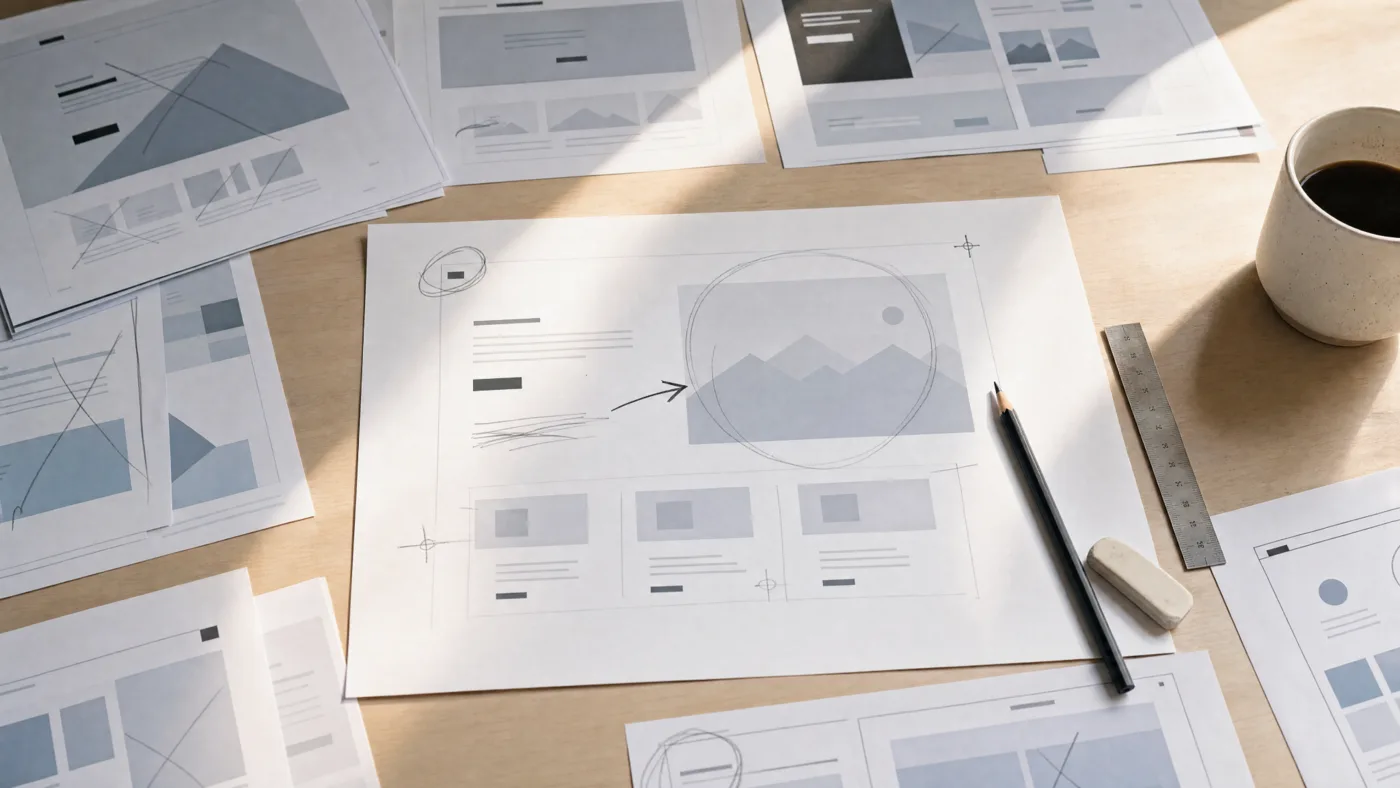
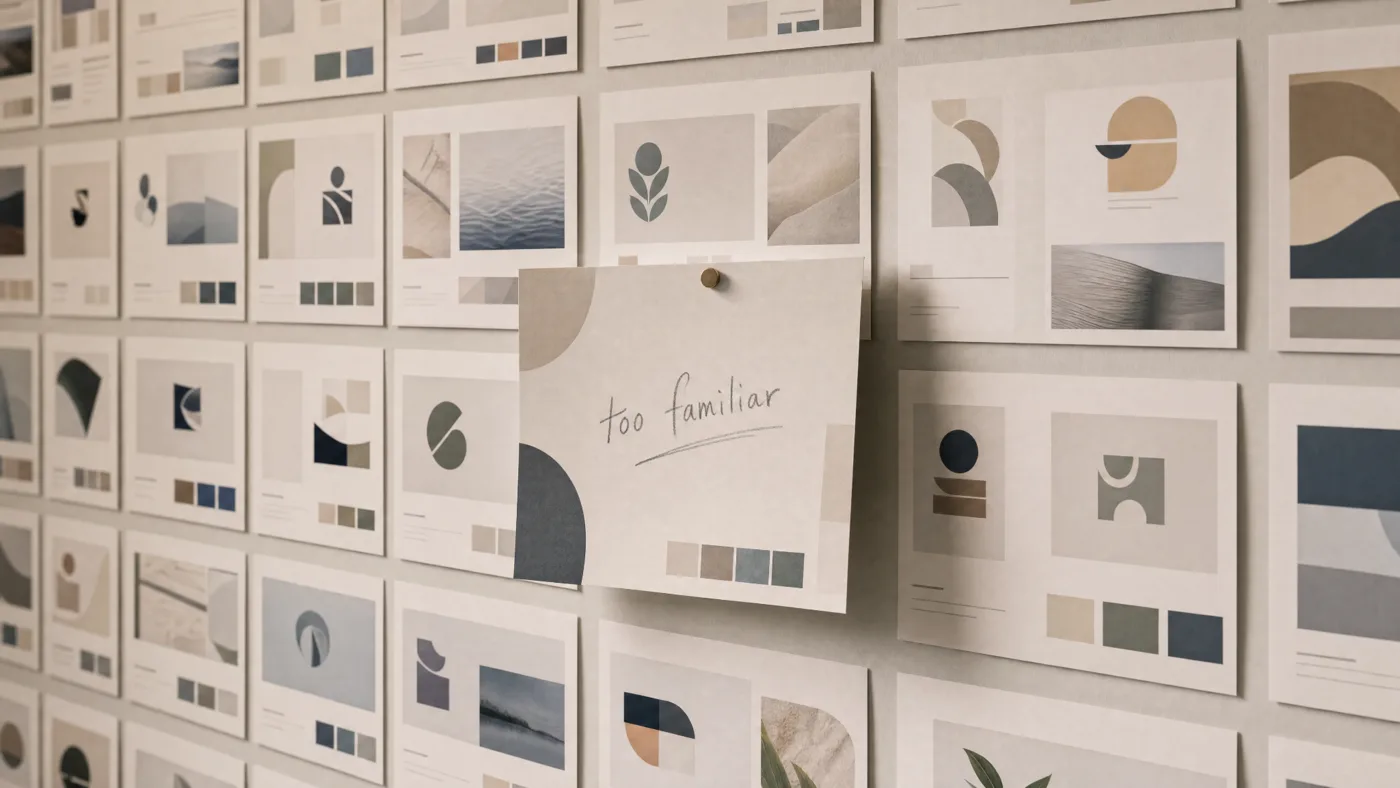
It shows us how much design has become predictable.
Same hero layout.
Same rounded cards.
Same gradient glow.
Same “We help brands grow” headline.
Same fake confidence.
Same empty polish.
AI did not create that problem.
It simply made it impossible to ignore.
The designers who are feeling the most pressure are not always the bad designers.
Many of them are good with tools.
Good with layouts.
Good with presentation.
Good with making something look finished.
But the role is shifting.
The value is no longer just in making options.
AI can make options.
The value is in knowing which option deserves to live.
That is a different skill.
It requires judgment.
It requires knowing when a design is too loud.
When a layout is trying too hard.
When the copy sounds polished but says nothing.
When the brand feels expensive but not honest.
When the work is attractive, but not true.
This is the part AI still struggles with.
AI can give you more.
A designer has to decide what to remove.
AI can generate style.
A designer has to find meaning.
AI can follow patterns.
A designer has to know when the pattern is the problem.
The future does not belong to designers who can make the most screens.
It belongs to designers who can ask better questions before the screen exists.
Who is this really for?
What should they feel?
What should they trust?
What should they remember?
What should we not say?
What should we remove so the message becomes stronger?
That is design.
Not decoration.
Not trends.
Not just pixels arranged nicely.
Design is a decision-making process.
And AI has made that process more important, not less.
Because now everyone can make something that looks decent.
The difference will be in the thinking behind it.
A weak designer will use AI to produce more average work faster.
A strong designer will use AI to move through the average ideas quicker, then stop at the point where human taste has to enter.
That pause matters.
The pause before choosing.
The pause before deleting.
The pause before saying, “This looks good, but it is not right.”
That is where real design lives now.
So no, AI did not kill designers.
It killed the comfortable middle.
It killed design that was only clean.
Only trendy.
Only fast.
Only good enough to pass a meeting.
And maybe that is not a bad thing.
Because for the first time in a long time, designers cannot hide behind tools, templates, or taste that looks borrowed from the internet.
We have to become clearer.
Sharper.
More human.
More specific.
More honest about what our work is actually doing.
The screen is no longer the hard part.
The hard part is knowing why the screen should exist at all.
One day, a designer will sit in front of ten perfect AI-generated options.
Nine will look impressive.
One will feel right.
And the future of design will belong to the person who knows the difference.
Written by Allgood Studio.
Human-led design, AI-assisted speed, and careful hands for brands, websites, and digital products.